
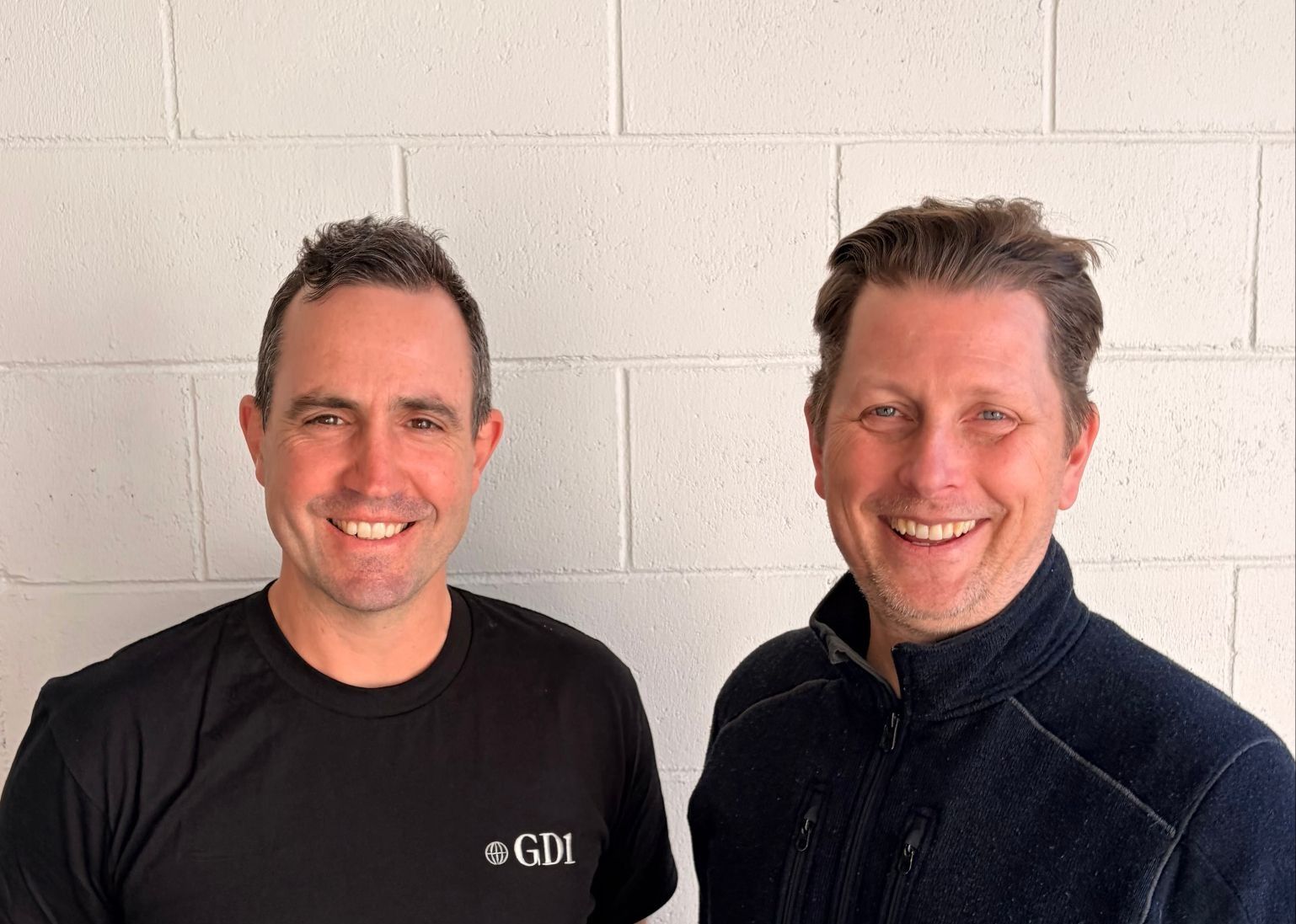
I trained as a chemist before I was ever an investor, so there was something quietly satisfying about sitting down with Chris Oze and realising the core of Kura Dynamics' story is a reaction I'd have recognised from a first-year geochemistry textbook: water meeting iron-rich rock, and hydrogen coming out the other side. It's a reaction the Earth has been running for billions of years, mostly unnoticed, to produce what is known as “geologic hydrogen”. While others are asking where to find geologic hydrogen, Chris, Peter Joynt, and the rest of the Kura team are asking a much harder question: can we actually understand this process well enough to work with it deliberately, rather than just stumbling across where it happens to have pooled?
I'm delighted to share that GD1 has co-led Kura Dynamics' NZ$4.65M Pre-Seed round alongside our friends at Motion Capital, with Outset Ventures, K1W1, and NZGCP also participating. I'll be joining Kura's board as Investor Director.
Why Are We Excited About Kura? A problem hiding in plain sight…
A problem I kept coming back to
Clean hydrogen is a fuel source everyone agrees we need more of, but that almost nobody can make work economically at the scale we need it. Clean hydrogen can play a central role in decarbonising steel, chemicals, heavy transport, and long-duration energy storage, but today it's still overwhelmingly produced from fossil fuels. The clean alternative - renewables-powered electrolysis - remains expensive (mostly) and slow to scale. What kept pulling me back in the more time I spent with Chris and the team was that while there is a growing body of evidence that hydrogen is being generated continuously, naturally, underground, wherever water reacts with iron-rich ultramafic rock, we simply don't yet understand these subsurface systems well enough to find, manage, or make the most of that resource. That's a genuinely interesting gap for a deep tech company to sit in.
Not another exploration play
Most of the companies I looked at in this category are doing what oil and gas exploration has done for a century: searching for places where hydrogen has already accumulated naturally. Kura is doing something different. Rather than only hunting for pooled hydrogen, the team is building a technology platform to understand, stimulate, and optimise the underground processes that generate it in the first place - bringing together decades of real-world geochemistry expertise, geological data, and advanced computing into what they describe internally as a control system for subsurface hydrogen recovery.
If their approach is right, the implications are significant. Independent academic research already suggests geologic hydrogen could end up far cheaper and with lower carbon intensity than either fossil-derived or renewables-powered hydrogen simply due to the scale of the geology at our disposal, and - unlike intermittent renewable-powered electrolysis - it has the potential to behave as a firm, dispatchable supply. To be clear, Kura isn't setting out to manufacture hydrogen itself (yet!). Its ambition is to build the intelligence layer that lets others do that safely, efficiently, and at a scale that matters.
A very New Zealand story
Kura has spun out of Aspiring Materials, the Christchurch cleantech critical-minerals company Chris also co-founded (and remains an advisor of), which is now scaling its own pilot plant. Something is fitting about the fact that New Zealand's South Island sits on ultramafic rock systems that local researchers have studied for decades - it gives Kura an unusually good environment to start its lab testing, modelling, and monitoring work close to home, with the University of Canterbury geochemistry department and the emerging local hydrogen technology ecosystem as natural partners. It's the kind of deep tech story I find genuinely compelling: a small, geologically rich country with a tight-knit research community and an emerging centre of excellence, tackling a problem of real global consequence.
A team I trust to pull this off
Chris leads Kura as co-founder, Chief Innovation Officer, and interim CEO. His research into ultramafic rocks goes back decades and is the same foundation that underpinned Aspiring Materials. Peter Joynt, the team's geological data expert, brings 13 years of building AI and geophysics software at Seequent, which was acquired by Bentley Systems for more than US$1B in 2021: a true local-to-global technology success story.
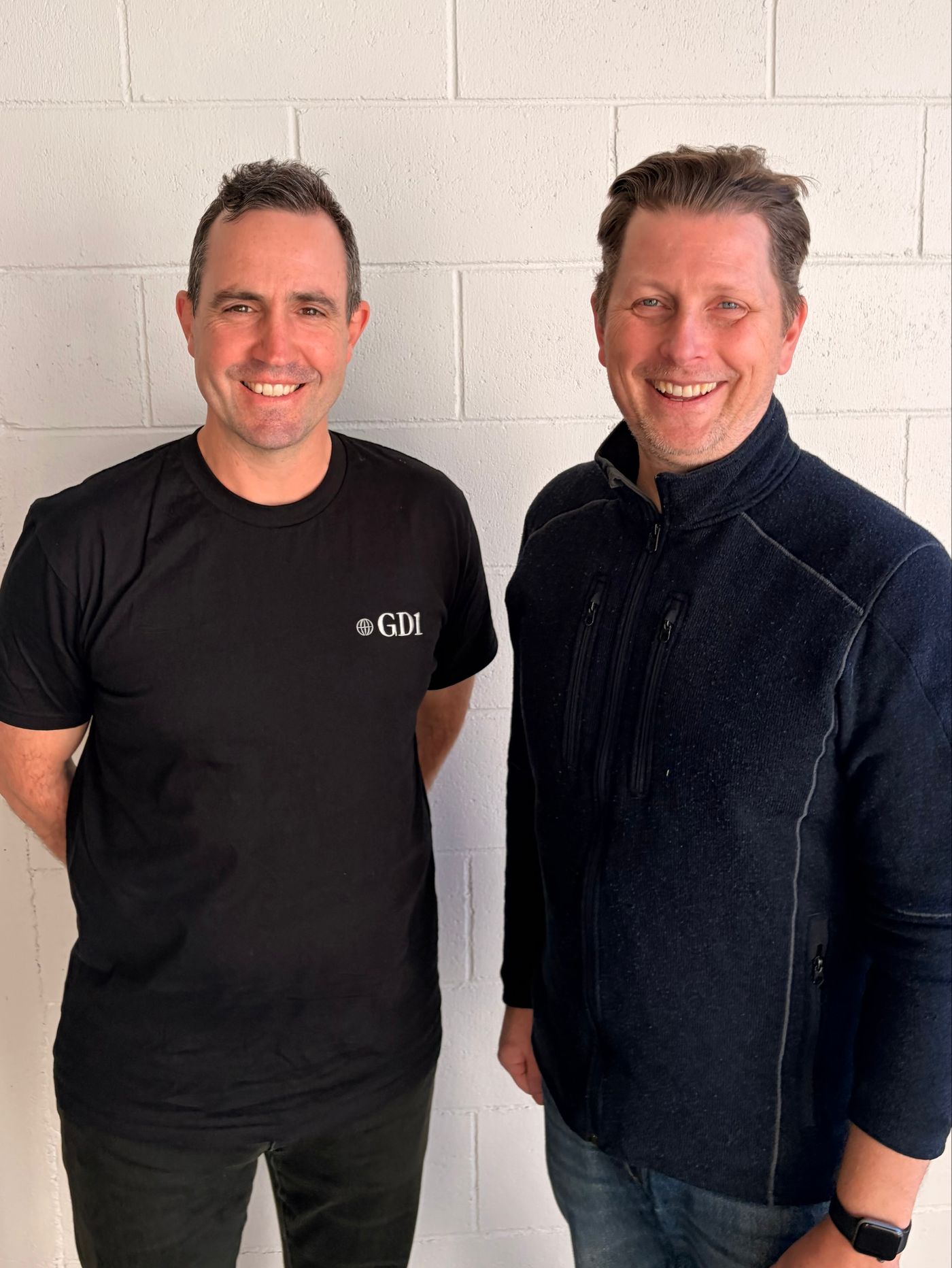
Aaron Small and Chris Oze at Kura’s new Christchurch offices.
Early progress in a category that's heating up
In a short space of time, Kura has gone from lab hypothesis to the early foundations of a data and technology moat that should compound as its technology is validated against real-world results. The broader geologic hydrogen category is still nascent, but capital is moving quickly: peers focused on exploration and production have collectively raised in the hundreds of millions of dollars over the past year or two. That tells me two things - the space is early, and conviction is building fast.
We're glad to be backing Chris, Peter, and the rest of the Kura team on one of the more interesting problems in the energy transition, and we want to thank them for trusting GD1 and me to co-lead this latest round. The future of geologic hydrogen is here!